
 Aashir Khalil
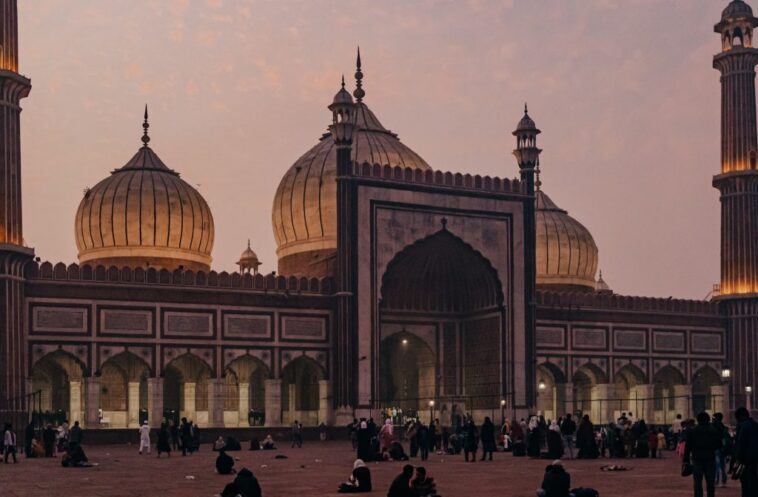
Muslim leaders accuse Mumbai police of selectively enforcing noise pollution laws against mosques while ignoring loud celebrations and firecrackers during Hindu festivals
NEW DELHI, India (MNTV) — Police in India’s Maharashtra state have ordered several mosques in Mumbai to remove their loudspeakers within three days, triggering allegations of religious discrimination as Muslim leaders questioned why noise pollution laws were being enforced selectively against Islamic places of worship, as reported by muslimnetwork.tv
The notices were issued by Malwani police to mosque trustees in the Malad area of Mumbai, India’s financial capital, citing court directives aimed at controlling noise pollution.
Mosque representatives, including those from Tayyiba Mosque in the MHADA residential area, challenged the repeated notices during a meeting at the local police station, arguing that authorities were unfairly targeting Muslim religious institutions.
They questioned why similar restrictions were not being imposed during Hindu religious celebrations, particularly the Ganpati festival, when loud music and firecrackers are commonly used during processions and idol immersions.
The representatives said they had previously received notices during the festival period and asked whether police had monitored noise levels during the celebrations or taken comparable action against those violating permissible limits.
Police reportedly responded that enforcement action was initiated whenever complaints were received.
Saleem Abdul Sheikh, president of Malwani MHADA Jama Masjid, accused authorities of deliberately targeting Muslims despite mosques complying with prescribed noise limits.

Mahabat Maqbara mosque, one of over 300,000 to 400,000 active mosques in India.
“This has become a joke. Notices are issued almost every day, and we are repeatedly pressed to remove loudspeakers even though the decibel limits are being fully observed. It seems the police are deliberately targeting Muslims,” Sheikh said.
Muhammad Jameel Merchant, head of Merchant Foundation and a representative of Masjid Hazrat Ali, displayed a police notice directing the removal of loudspeakers.
The notice, signed by Senior Inspector Rani Puri, cited a court order in a 2010 public interest litigation concerning noise pollution, along with instructions from the Mumbai Police Commissioner.
Mosque representatives maintained that they had regularly obtained police permission to use loudspeakers and had complied with applicable regulations.
However, they accused authorities of recently delaying permission applications while claiming that fresh government guidelines were expected.
The trustees said
the uncertainty surrounding permissions, combined with repeated removal notices, was disrupting the ability of mosques to conduct religious activities.
Merchant said mosque representatives were preparing to independently monitor sound levels and preserve evidence for possible legal proceedings.
“We have also ordered a sound-level measuring device so that we can maintain our own records and take the matter forward legally on that basis,” he said.

Mosque trustees question repeated police notices, allege discriminatory treatment and say they are preparing to challenge the action with sound-level measurements
Loudspeakers are commonly used by Indian mosques to broadcast the adhan, the Islamic call to prayer, making restrictions on their use a sensitive issue involving religious freedom.
The dispute reflects wider concerns among Indian Muslims over the selective application of administrative regulations to Islamic religious practices.
Mosque trustees have demanded consistent enforcement of noise pollution laws across religious communities and clear procedures for obtaining permission, rather than repeated notices ordering the removal of loudspeakers.